



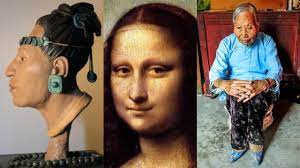






















































A view from nowhere
My recent exchange with April DeConick got me thinking about how little attention is paid to the question of hermeneutics in the pursuit of historical questions. When we talk exegesis everyone wants to discuss hermeneutics, but when we talk about historical investigation it seems missing from the discussion (at least as history applies to biblical studies).
I like to tell my students that—whether we like it or not—what we bring to a given text is often as determinative as what we find in the text. Our “lenses” (so to speak) color, shade, and sometimes taint our best attempts at objectivity. Given the best scholarly controls, we still find at least a bit of ourselves (and often a lot of ourselves) in our interpretations. Add to this the methodologies we choose to employ and we can often find ourselves talking past each other rather than genuinely communicating. I tried to discuss this in my brief exchange with April (and she later seemed to characterize my critique as one seeking to preserve historicity and canonical authority (see para 3), which not only misses the point but is not even part of my approach to the issue of John and Thomas. (As an aside, I think it is ironic that she seems to be subtly mischaracterizing my view while chastising Robert Eisenman for mischaracterizing hers.)
So let me attempt a little more clarity on this issue. There is no such thing as a “view from nowhere.” There is no such thing as a disinterested reading of a text or an unbiased pursuit of historical knowledge. There is no such thing as objectivity. Even our best attempts at objectivity fail. There are no facts without individuals to interpret them. There are no individuals without biases. This means that every exegetical or historical pursuit is filtered through the lenses of one’s presuppositions, biases, background, experiences, etc. This does not mean that our scholarship is destined (or doomed, some might say) to be apologetic or polemical in nature but an admission of this does allow for more intellectually honest discourse about our conclusions.
I do not mean to set up a “free for all” where we can all create our own meaning and every interpretation is equally valid. I do believe we should acknowledge our presuppositions going into a discussion. What we bring to a text or an investigation is as determinative as what we find there, whether we like it or not. So it is possible to honestly evaluate someone’s else view, while also, equally honestly, divulging one’s presuppositions. I’m not sure everyone in the discussion (including April) is convinced of this.


Trackbacks